

testimonials
96 Students from Mississippi State University Compete in a Local Supply Chain Student Challenge
July 28, 2026
Mississippi State University College of Business launched its inaugural Supply Chain Student Challenge to give students a practical, high-impact way to experience the complexity of end-to-end supply chain decision-making.
Using Inchainge’s new Introduction to Supply Chain Management learning solution running on The Fresh Connection business simulation platform, 96 students across 24 teams, 11 majors, and three colleges worked through real supply chain trade-offs, competed in multiple simulation rounds, and presented their decisions to a panel of industry experts.
For Christopher Boone, Associate Professor of Supply Chain Management and Director of Experiential Learning at Mississippi State University College of Business, the challenge offered a scalable way to bring applied learning into the curriculum while helping students connect classroom concepts to real operational and financial outcomes.
 Summary
- Mississippi State University College of Business wanted to create an internal case competition that could scale across its growing supply chain and logistics program.
- The challenge brought together 96 students from 11 majors and three colleges.
- Students used Introduction to Supply Chain Management to explore sales, operations, supply chain, and purchasing decisions.
- The solution helped students build confidence before entering the competitive rounds by giving them structured practice in each functional area.
- The top four teams presented their strategies, results, and decision-making to a panel of industry experts.
- The experience helped students understand how decisions in one area of the supply chain ripple across the full business.
The Challenge: Creating Experiential Learning at Scale
Mississippi State University has a long history in supply chain and logistics education, with a logistics-oriented concentration dating back to the 1950s. In 2021, the university introduced a standalone major in supply chain logistics, which has since grown rapidly.
As the program expanded to more than 150 students, the College of Business began looking for ways to create meaningful experiential learning and case competition experiences to create career-ready graduates that could reach many students without placing an unrealistic burden on faculty resources.
The goal was clear: give students an applied, end-to-end supply chain experience that could support the growing program, connect with industry, and fit within the realities of a busy academic environment.
As Christopher explained, the central question was how to “do something at scale for a new program” and reach as many students as possible without requiring the same level of resources as a traditional case competition.
This also aligned with the College of Business’ broader focus on experiential learning. With the theme “Experience Bulldog Business,” Mississippi State University College of Business has placed increasing emphasis on helping students graduate career-ready through applied, hands-on experiences.
For Boone, simulations play an important role in that mission.
“You can’t take 3,000 students to a port,” he explained. “So you have to look for ways that we can scale experiential learning.”
The Solution: A Simulation-Based Student Challenge
To bring the challenge to life, Mississippi State University used Introduction to Supply Chain Management, Inchainge’s new learning solution, developed as a part of Inchainge’s Quick-Start Portfolio for educators introducing supply chain concepts for the first time.
This solution offers a practical way to bring experiential learning into the classroom without adding complexity, heavy facilitation, or major preparation time.
Christopher had already used The Fresh Connection in MBA-level courses and had a long-standing relationship with Inchainge. His experience with the simulation gave him confidence that it could help students understand how supply chain decisions connect across the business.
In the student challenge, participants worked in teams of four to make decisions across sales, operations, supply chain, and purchasing. They navigated areas such as customer negotiations, forecasting, inventory management, production scheduling, capacity management, supplier selection, and financial and operational performance.
One of the key advantages of Introduction to Supply Chain Management was that it helped prepare students before they entered the competitive simulation rounds.
Because the challenge included students with different levels of supply chain knowledge, some nearing graduation and others entering their first upper-level classes, Boone needed a way to create a more even starting point. ISCM provided that foundation.
Each functional module allowed students to work through focused rounds before moving into the full competition. This gave them time to understand the roles, decisions, and business logic behind the simulation.
For Boone, this was one of the strongest parts of the experience.
“The Introduction to Supply Chain Management courses were a great value add,” he said. “They allowed us to level up. I felt comfortable that if students worked through each of those, they would have a more in-depth understanding of each function before we got to the competitive rounds.”
This structure also changed the nature of classroom discussions. Instead of spending valuable time on how to navigate the simulation, Boone could focus on the deeper learning outcomes: trade-offs, decision-making, and the relationship between operational and financial performance.
“The simulation is a tool to help us explore supply chain concepts,” Christopher explained. “ISCM allowed us to spend more time on the value add and the trade-offs of decisions, rather than the technical side of navigating the simulation.”
The Impact: Stronger Connections, Confidence, and Industry Engagement
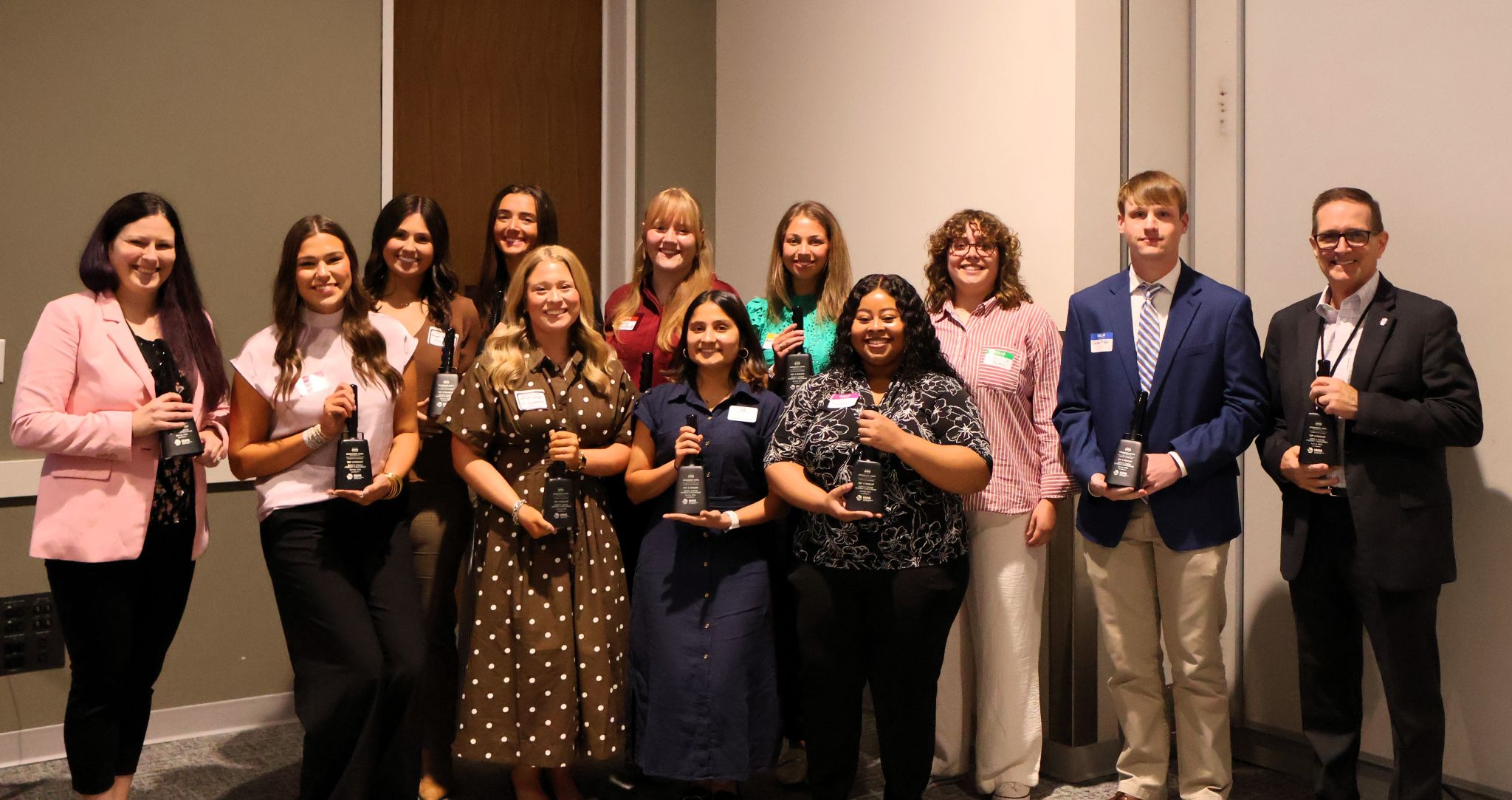
The inaugural Supply Chain Student Challenge brought together 96 students from 11 majors and three colleges, extending the impact beyond supply chain students alone.
For Mississippi State University, this was a major benefit. The challenge introduced students from different academic backgrounds to the importance of supply chain management and gave them a more holistic view of how businesses operate.
Whether students go on to work in supply chain, finance, accounting, engineering, or another field, the experience helped them understand how supply chain decisions affect operational and financial performance.
The team-based format also encouraged students to collaborate, discuss trade-offs, and learn from peers with different levels of experience. While teams competed against each other, the real value came from how students learned to justify their decisions and connect them back to business outcomes.
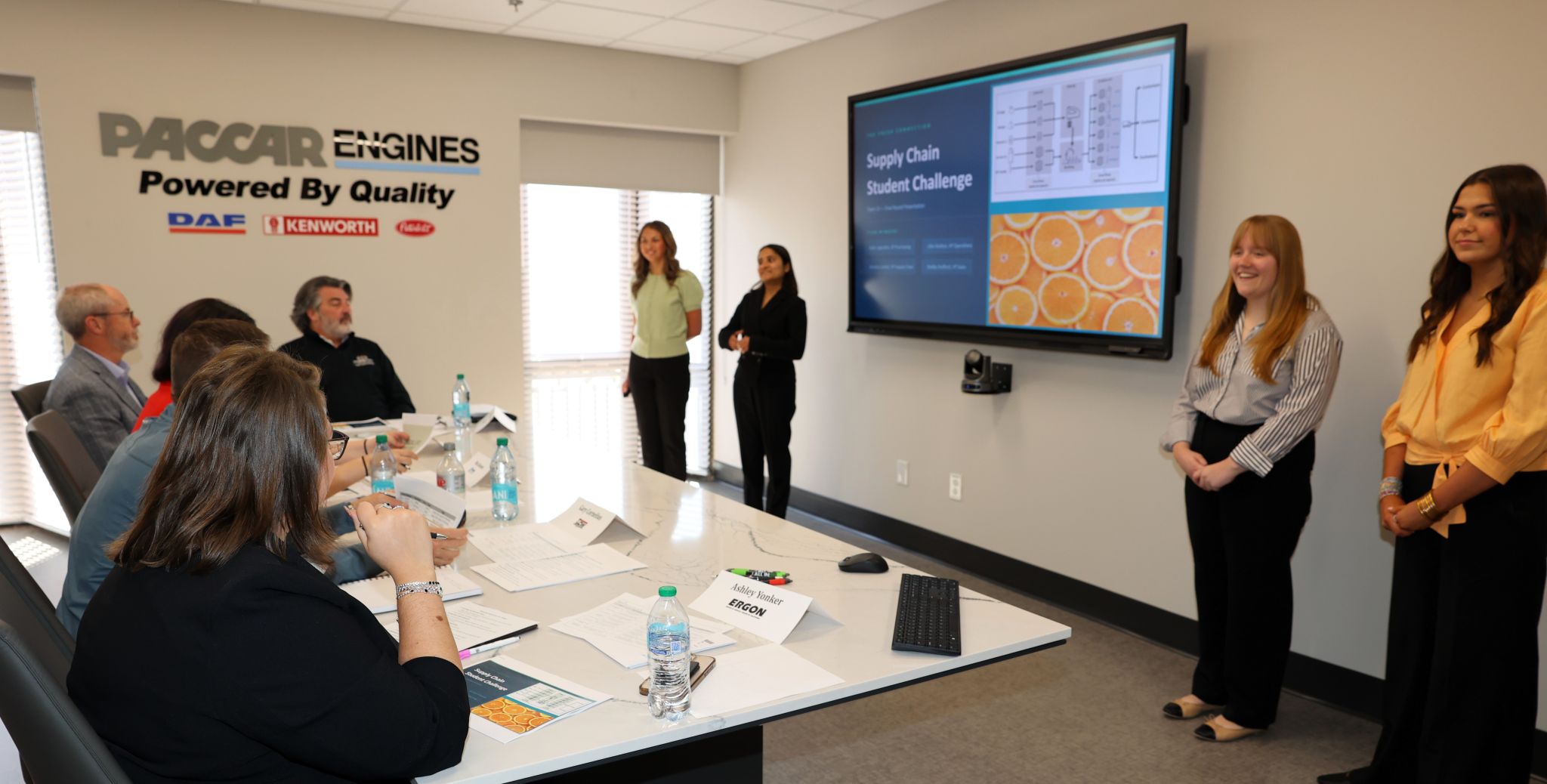
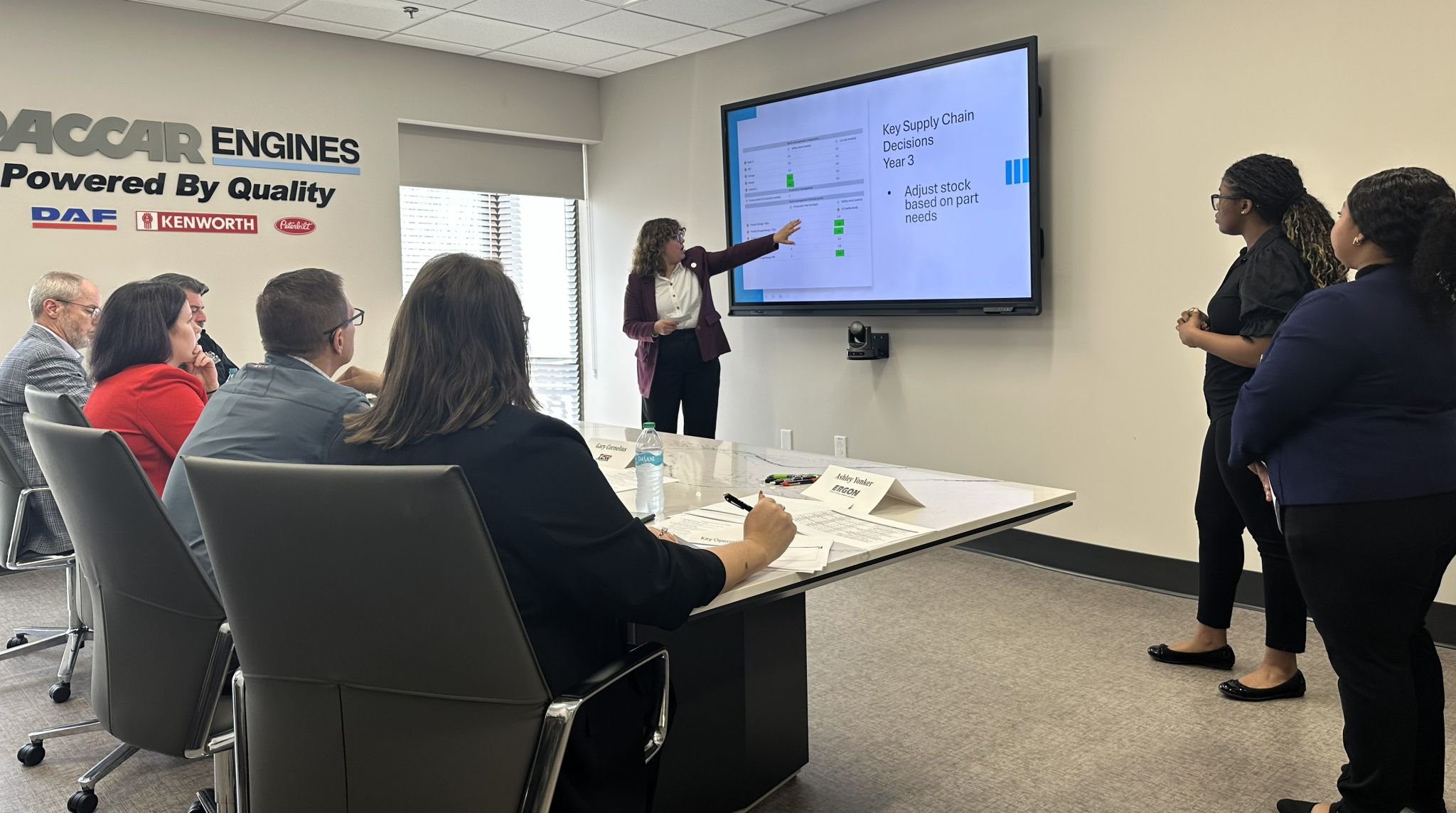
The challenge culminated in a final round where the top four teams presented their strategies and results to a panel of industry professionals. The students were not simply reporting simulation scores. They had to explain why they made certain decisions, answer questions from industry experts, and demonstrate that they understood the relationships across the supply chain.
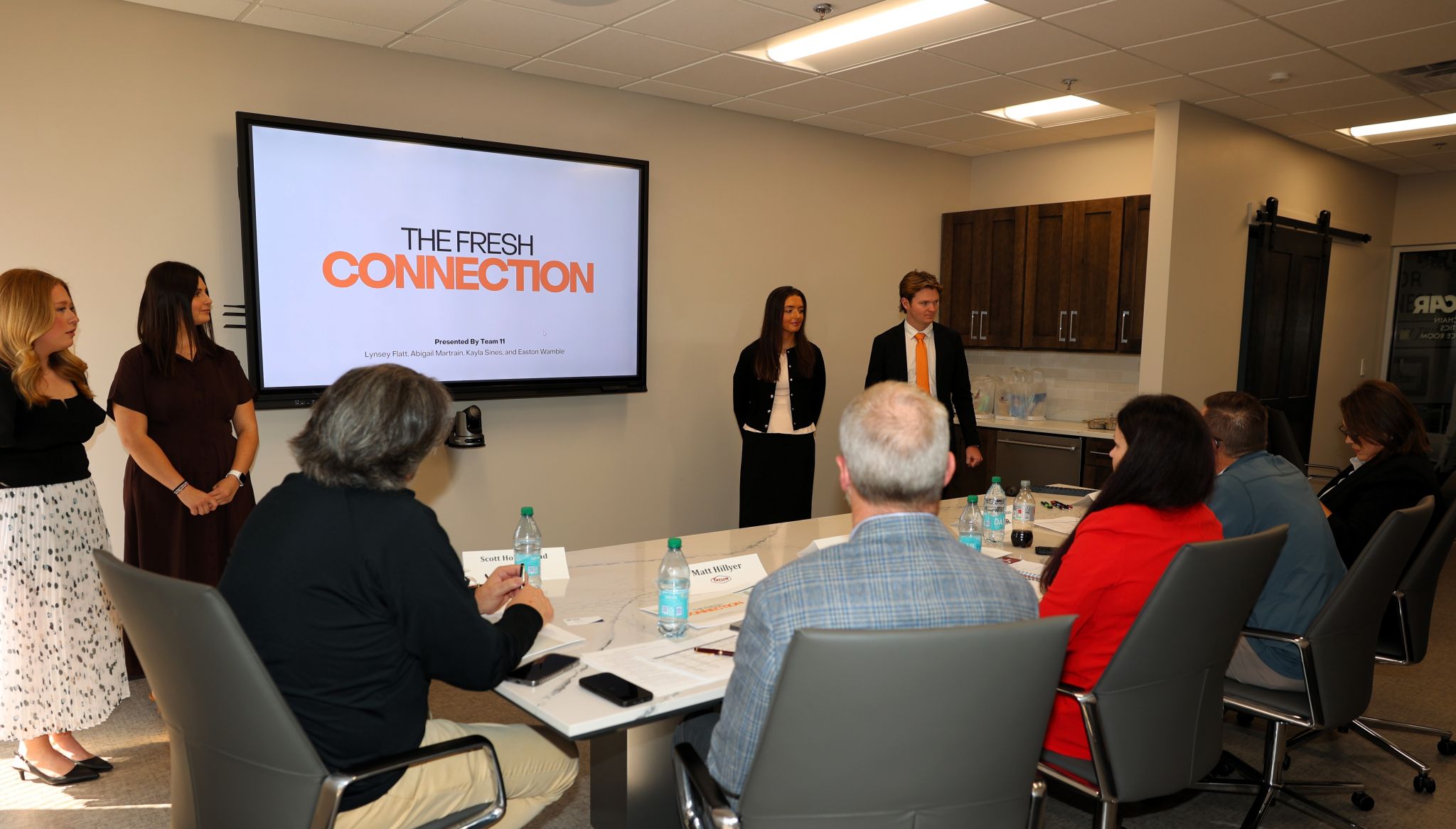
“To watch the students make those connections across the supply chain and be able to talk about it helped our program shine in front of some of our major employers,” Boone said.
The experience also helped students develop confidence. By working through multiple rounds and preparing for the final presentation, they had to move beyond surface-level participation and develop enough understanding to defend their choices.
This was especially important in a time when students have access to AI tools. Christopher emphasized that while students may use AI to support their learning, they still need to understand the content deeply enough to stand in front of a group and explain their reasoning.
“At the end of the day, someone has to stand up in front of the group and pitch the reason why they made those decisions,” he said. “They have to understand it well enough.”
A Scalable Model for Future Experiential Learning
The success of the inaugural challenge has encouraged Mississippi State University to continue building on this approach. Boone plans to run the Supply Chain Student Challenge again and has already incorporated Introduction to Supply Chain Management into his MBA course.
For him, ISCM has proven valuable not only for undergraduate students, but also for MBA students with diverse academic and professional backgrounds. It provides context, builds confidence, and gives learners a practical way to understand how supply chain concepts apply in a business setting.
The partnership with Inchainge also played a central role in the success of the implementation. Christopher highlighted the flexibility and support he has received from the Inchainge team over the years, from adapting the simulation to different teaching formats to helping him think through new ways to use The Fresh Connection.
“I just don’t know that you get that level of support with any other kind of tool,” Boone said. “Having that support behind you makes you feel comfortable to jump in.”
For Mississippi State University College of Business, the challenge demonstrated how simulation-based learning can scale experiential education while creating meaningful connections between students, faculty, and industry. It was a practical example of applied learning in action—one that helped students see the supply chain as a connected system, understand the consequences of their decisions, and build the confidence to explain those decisions in front of industry professionals.
Interested in Introduction to Supply Chain Management?
Request an interactive walkthrough of Introduction to Supply Chain Management and see how it can support practical experiential learning in your classroom.
Want to Run a Similar Student Challenge?
If you are interested in running a similar student challenge in your university, get in touch with us for an exploratory call. Inchainge student challenges are available across a variety of topics, including supply chain management, sustainability, and circularity.
About the Educator

Christopher A. Boone
Dr. Christopher A. Boone is an Associate Professor of Supply Chain Management and Director of Experiential Learning at Mississippi State University, with a PhD in Management from Auburn University and a distinguished academic background from the U.S. Air Force Institute of Technology’s School of Engineering and Management.
Before entering academia, he served for 22 years in the United States Air Force. He has contributed to the development of logistics and supply chain programmes at multiple universities, including Georgia Southern University, Texas Christian University, and Mississippi State University. Alongside his academic work, he engages with industry audiences, advises organisations such as SMC3 and the American Trucking Associations’ Trucking University programme, and serves on the Council of Supply Chain Management Professionals board.
He is also a co-author of the Annual Study of Trends in Logistics and Transportation, published by Logistics Management Magazine.

Empowering Students with Real-World Experience
Stephan Verhasselt is a lecturer at FHNW University of Applied Sciences in Switzerland, where he has been teaching for over 10 years. His goal is to prepare students for the real world by providing hands-on learning experiences.
Education

Revolutionizing Sustainability Education
HAN University educators use game-based learning to bring real-world sustainability decisions into a safe, virtual environment and deepen students’ understanding of complex trade-offs.
Education